


Ragdoll Sandbox 3D
4.5124.00 Reviews
App Specs
- Version
- 4.2
- Updated On
- License
- Free
- Downloads
- 5,000,000+
- Developer
- TeaGames!
- Categories
- Simulation
- Platform
- Android
Screenshots
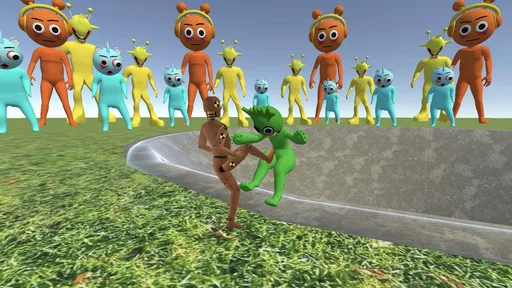
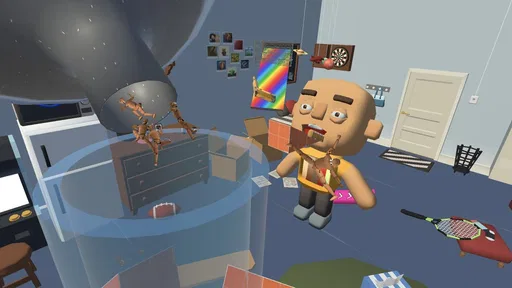
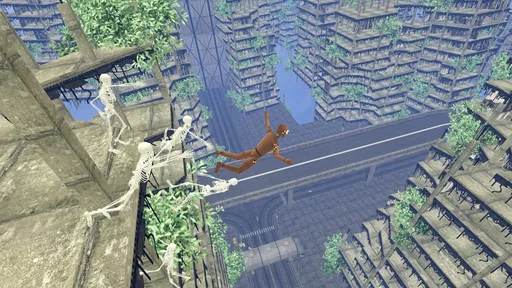
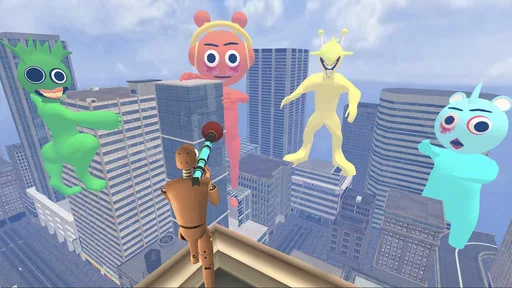
 Analysis by AppCompare
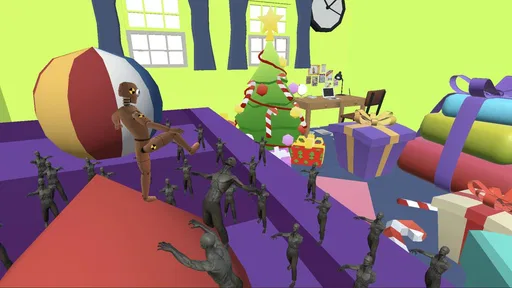
I spent time with Ragdoll Sandbox 3D to see whether its simple idea can hold attention beyond a few minutes of throwing characters around. TeaGames! presents it as a simulation game built around physics experiments, and that description is accurate in spirit: the appeal comes from setting up little scenes, changing what happens, and watching the results unfold rather than following a traditional campaign.
It is free to play, which makes the decision to try it easy. The game is rated Everyone 10+, runs on Android 7.0 or later, and its current version is 4.2. Those details matter because this is the kind of title that works best as a quick experiment on a spare device or during a short break, not necessarily as a replacement for a deep management simulator or a story-driven game.
What kind of sandbox this really is
The central attraction is the freedom to test cause and effect. Instead of asking me to complete a fixed chain of missions, the game gives me a space where the entertainment comes from arranging a situation and seeing how the physics respond. A ragdoll can become the subject of a harmless experiment, a moving obstacle, or part of a deliberately chaotic scene.
That open-ended structure changes how I judge it. A conventional game can tell me whether I am progressing through levels, while this one depends on whether I enjoy inventing small challenges for myself. I found the best moments came when I stopped looking for a single “correct” action and started treating each setup as a miniature test: place something, interact with it, observe the movement, then adjust the arrangement.
The 3D presentation helps because it gives those experiments a clearer sense of space. Position matters, and viewing a scene from different angles makes it easier to understand why a result happened. This is also where the game becomes more interesting than a basic animation toy. Even when the outcome is silly, the player can usually connect it to the way the objects were arranged.
At the same time, the sandbox format has a natural limit. If you need missions, unlockable goals, character development, or a strong narrative reason to return, the experience may feel thin. The game’s strength is experimentation, not a carefully paced progression system. I would approach it as a physics playground first and a conventional game second.
How I approached the experiments
My most useful habit was to change only one part of a scene at a time. If I moved several objects together, it became difficult to tell which change caused the new result. Moving one element, repeating the setup, and comparing the outcome made the physics feel more understandable and turned random play into a simple learning loop.
Worth Reading Before You Choose

EA SPORTS FC Mobile 26 Is a Bigger Football Game, but It Takes Time

Flipboard Shows What News Apps Must Do Beyond the Feed

Switching to Android Auto Means Rethinking Your Driving Routine

Google Calendar Makes a Crowded Week Easier to Manage

Ludo King Makes the Most of the Minutes Between Plans

Baby Panda World Brings Quick Play to Modern Phones, but Its Game Library Feels Busy
Another practical approach is to begin with a small arrangement instead of filling the scene immediately. A crowded setup can be funny, but it is harder to read. Starting with one ragdoll and a limited number of interactions gives the movement room to make sense. Once the result becomes predictable, adding another element creates a more interesting chain of reactions.
This is one of the game’s less obvious strengths: it rewards curiosity without requiring technical knowledge. I do not need to understand formal physics to enjoy it, but thinking in terms of balance, momentum, and timing makes the experiments more satisfying. The game can therefore serve both the player who wants quick visual chaos and the player who likes testing a theory.
Value when access costs nothing
Because the game is free, its value is not about comparing a purchase price with the amount of content. The more useful question is whether it gives me enough flexible play to justify keeping it installed. For a free sandbox, the threshold is reasonably simple: it should be easy to start, entertaining in short sessions, and open enough that the player can create situations rather than repeat one trick.
That is where this title makes a sensible case for itself. I can open it without preparing for a long session, try an idea, and stop when the experiment has run its course. The lack of a required commitment is especially helpful for younger players who enjoy visual cause and effect, or for anyone who wants a casual game that does not demand constant concentration.
Its audience size also suggests that the concept has found a substantial player base. The game has passed five million installs and holds a 4.5 average from around thirteen thousand ratings. I treat those figures as a sign of broad interest rather than proof that every player will enjoy it. Physics sandboxes are naturally divisive: some people love making their own objectives, while others quickly ask what they are supposed to do next.
The review count is more limited than the rating count, with 124 reviews shown alongside the broader rating activity. I would not use that distinction to make a strong claim about long-term depth. Instead, I see the available response as enough to confirm that the basic idea appeals to many users, while the real value still depends on whether self-directed play suits you.
There is also a useful difference between free access and paid value here. Since the game is free, I am not judging it as a premium simulation that must deliver a complete, polished progression system. I am judging it as an accessible experiment space. That makes its occasional simplicity easier to accept, but it does not excuse confusing interaction or repetitive results. Free is a reason to try it, not a reason to ignore its weaknesses.
Where the experience can become repetitive
The main trade-off is that the player supplies much of the structure. After discovering a few entertaining interactions, I may find myself repeating the same kind of setup unless I deliberately invent a new rule. For example, I can decide to build a controlled test, create a chain reaction, or see how a scene changes when I alter only its starting position. Without that personal challenge, the novelty can fade.
This is also why I would not recommend it as the only game on a long trip. It is well suited to short visits, but its open format can feel less rewarding when I want a clear objective. A level-based physics game would be a better choice for someone who prefers puzzles with defined solutions. A construction simulator would suit a player who wants a larger project and a sense of structured development.
Compared with a traditional simulation game, this one is lighter and more immediate. It does not ask me to manage a complex economy, maintain a realistic schedule, or learn a large set of systems before the experiment becomes enjoyable. That accessibility is a genuine advantage, but it also means the game may not satisfy players looking for detailed planning or long-term consequences.
Compared with a physics puzzle game, the sandbox approach gives me more freedom but less direction. A puzzle usually tells me what success looks like; here, I decide whether the result was interesting. Compared with a ragdoll-focused action game, the emphasis is less on winning a fight or clearing a stage and more on observing motion. Choosing between these alternatives depends on whether I value creation, challenge, or progression most.
Small habits that improve the play session
I recommend treating each session as a question rather than as an attempt to find endless content. “What happens if I change this?” is a better starting point than “How do I finish?” That mindset prevents the game from feeling like a conventional title missing its missions.
It also helps to pause after an unexpected result instead of immediately resetting. A surprising movement can reveal that the scene was affected by placement or timing in a way that was not obvious at first. Repeating the same arrangement once or twice lets me separate a reproducible interaction from a one-off moment.
For a family setting, I would encourage an adult to try the game alongside a younger player at first. The Everyone 10+ rating gives a useful age guide, but the bigger practical question is whether the child finds the physics amusing, confusing, or too focused on ragdoll mishaps. Playing together turns the sandbox into a shared guessing game and makes it easier to set sensible boundaries around what kind of experiments are enjoyable.
On an older compatible device, I would keep scenes modest if the experience begins to feel less responsive. I cannot promise a specific performance level across every phone or tablet, because hardware varies widely, but the general principle is straightforward: simpler setups are easier to understand and usually easier for a device to handle. That is good advice for clarity even when performance is not an issue.
Who will get the most from it
I think the strongest audience is made up of curious players who enjoy testing systems without being told exactly what to do. If you like making a small setup, watching it fail in an amusing way, and trying again with one adjustment, this game offers a comfortable space for that habit.
It is also a good fit for short, low-pressure sessions. Someone waiting for an appointment could open it, create a quick experiment, and leave without losing progress through a long story or interrupting a competitive match. The free price removes the need to plan a purchase, so the game is easy to test as a secondary title.
Creative players may find more value by inventing themed challenges. One session might focus on stability, another on timing, and another on creating the most surprising sequence with a deliberately small setup. These self-made rules are not just a way to extend play; they make the physics easier to observe and give each session a distinct purpose.
I would be more cautious about recommending it to players who need explicit goals. If you want a campaign, a ranking system, a detailed simulation model, or a steady stream of clearly defined rewards, this is probably not the right first choice. A more structured game in the same broad area would give you a stronger sense of progress.
What the developer and current release tell me
TeaGames! is the developer behind the title, and the current version is 4.2. The game was released on September 1, 2024, so I see it as a relatively recent entry rather than an old sandbox being rediscovered. The version number is useful when checking compatibility or deciding whether an update is available, although it does not by itself tell me how much the game has changed over time.
The Android requirement of version 7.0 or later keeps the technical entry point fairly broad. That does not guarantee identical results on every supported device, but it means people with older Android hardware may still be able to try it if their system meets that requirement. For anyone using a newer phone, the more important question is likely to be whether the open-ended design matches their taste.
I would not install it expecting a realistic scientific simulator. The physics are there to create playful situations, not to replace a classroom tool or a professional modeling application. That distinction matters because the game is most successful when I judge it by amusement, experimentation, and replayable setups rather than by scientific precision.
My recommendation after weighing the trade-offs
My verdict is a qualified yes. I recommend trying Ragdoll Sandbox 3D if you want a free simulation game that lets you experiment with ragdoll physics in short, self-directed sessions. Its broad reach, 4.5 average rating, and more than five million installs show that the idea has attracted plenty of attention, but I would still make the final decision based on your preferred style of play.
The strongest reason to install it is the low-risk freedom to test your own ideas. You do not need to commit to a purchase, learn a complicated management system, or follow a long narrative. Start with a small scene, change one variable, and use the result to decide what to try next. That workflow gives the game more depth than simply producing random chaos.
The reason to skip it is equally clear: if you need a reliable stream of goals, carefully designed puzzles, or meaningful long-term progression, the sandbox format may run out of momentum for you. In that situation, a structured physics game or a deeper simulation would be a better use of your time.
For everyone else, I would install it with modest expectations and a willingness to make my own fun. It is not trying to be a full management simulator, and it should not be judged as one. As a free physics playground from TeaGames!, it delivers its best value when I approach every scene as a quick experiment rather than waiting for the game to provide a complete plan.
Pros
- Simple controls make it easy to experiment with physics.
- Creative sandbox encourages open-ended play and experimentation.
- 3D environments make crashes and falls entertaining to watch.
- Works well for short gaming sessions or casual relaxation.
- Ragdoll interactions create funny and unpredictable moments.
Cons
- Gameplay can become repetitive after extended sessions.
- Limited objectives may not appeal to players seeking structured levels.
- Physics results can occasionally feel inconsistent or glitchy.
- Some content may require progression or additional unlocks.
- Ads may interrupt play
- depending on the version and device.
FAQs for Ragdoll Sandbox 3D
What is Ragdoll Sandbox 3D?
Ragdoll Sandbox 3D is a physics-based sandbox game where you can place ragdoll characters, objects, vehicles, weapons, and other interactive elements in an open playground. Instead of following a fixed story or completing traditional levels, you experiment with collisions, gravity, explosions, and different combinations to create entertaining scenes. The experience is mainly focused on creativity and free-form gameplay.
How do you play Ragdoll Sandbox 3D?
Gameplay is based on selecting items from the available menu and placing them inside the sandbox. You can move, rotate, remove, and interact with many objects while observing how the ragdolls react to the environment. The controls are generally easy to understand, although managing several objects at once may take a little practice. There is no single correct way to play, so experimentation is encouraged.
Is Ragdoll Sandbox 3D suitable for children?
The game is simple to operate, but parents should review its content before allowing younger children to play. Ragdoll physics can include crashes, falls, combat-style objects, and exaggerated cartoon violence. The presentation is usually more playful than realistic, yet the open-ended nature means players can create scenes that may not be appropriate for every age group. Checking the store rating and device settings is recommended.
Does Ragdoll Sandbox 3D require an internet connection?
Ragdoll Sandbox 3D may offer much of its basic sandbox gameplay offline, which is convenient when you want to experiment without mobile data or Wi-Fi. However, certain features can depend on advertisements, updates, downloadable content, or online services. Availability may also vary between Android and iOS versions. For the most accurate information, check the app-store listing and test the game after installation.
Is Ragdoll Sandbox 3D free to download?
Ragdoll Sandbox 3D can generally be downloaded without an upfront purchase, but free access may include advertisements, optional purchases, or limitations on some objects and features. Before installing, review the store page for details about in-app purchases and the developer’s monetization model. If ads appear frequently, they may affect the otherwise relaxed sandbox experience, especially during longer play sessions.


